


Padel racket and balls at the net, ready for play on an outdoor court.
Padel is one of the fastest-growing racket sports in the United States, with new courts and gyms popping up from Florida to California. If you’re stepping onto the court in 2025, having the right gear is just as important as learning the rules. This Padel equipment list will guide you through the 13 essential items every beginner player needs – from your first racket and balls to shoes, apparel, bags, and all the must-have accessories.
With new innovations rolling out for 2025, knowing what to buy (and where to get it in the U.S.) will give you confidence and help you play your best. We’ll include real-world examples, product comparisons, U.S.-specific availability and pricing, athlete endorsements, and even future gear trends – everything to ensure you’re fully prepared on the court.
Introduction to Padel Equipment Needs in 2025
Padel is a hybrid of tennis and squash, played on a smaller enclosed court with solid rackets. Unlike tennis, padel rackets have no strings and special holes, and padel balls are slightly different from tennis balls. Because the sport has unique demands (think quick reflex volleys off walls and sand-filled turf), specialized gear is required. In 2025, top brands are pushing new technology and updated padel equipment list – high-tech rackets with advanced materials, grip-enhancing shoes designed for turf courts, and smart accessories – to help beginners and pros alike improve their game.
Even though padel is relatively new in the U.S., almost all the gear you need is now available here. You can find padel rackets, balls, and shoes at specialty retailers (Padel USA, Total Padel) or on Amazon. For example, Dick’s Sporting Goods carries a few padel items (like Dunlop rackets and HEAD bags). Still, many players rely on online shops. The good news for new players is that basic padel gear doesn’t cost a fortune. You can start with an entry-level racket (around $80–$150) and still play confidently. As you progress, you might upgrade to mid-range or premium gear (rackets up to $300+, high-end shoes $120+), but the fundamentals are affordable.
By the end of this guide, you’ll know exactly what belongs on a beginner’s padel equipment checklist – and why. We’ll cover each gear category in detail, compare popular products, and explain key features so you can make smart buying decisions in 2025.
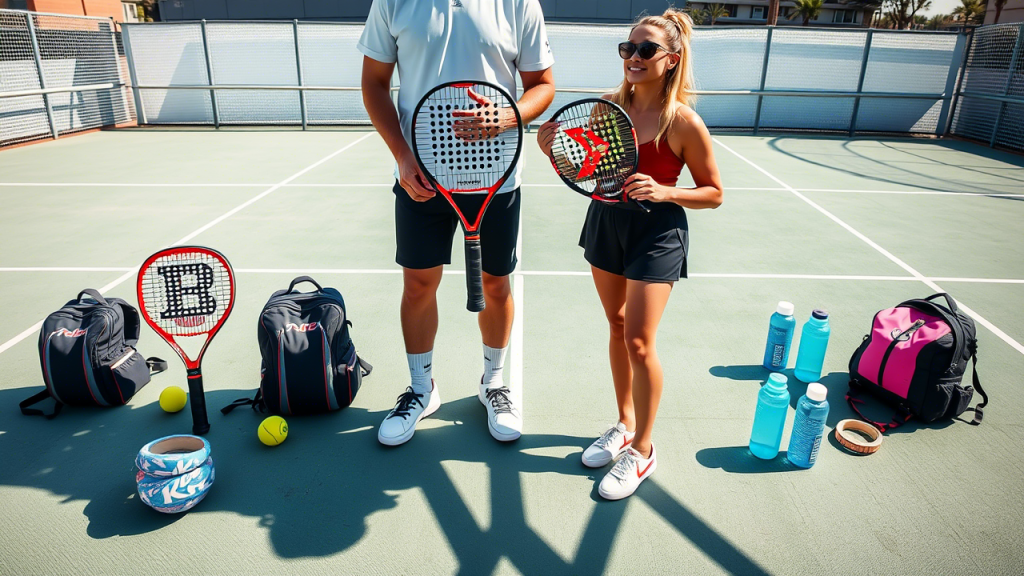
Rackets (Pala) – Your Primary Tool in Padel Equipment List
Your padel racket is the most critical piece of equipment – it’s how you hit every shot, defend, and attack. Choosing the right racket depends on your playing style, skill level, and physical strength and is the topmost priority in the padel equipment list New players often start with a racket designed for control and comfort, then progress to power-oriented rackets as they improve. Here are the key specs and factors to consider:
- Shape: Padel rackets come in three general shapes. Round rackets have a low (or head-light) balance and a large sweet spot, making them very forgiving – ideal for beginners who want maximum control. Diamond or teardrop shapes shift more weight toward the head, producing more power but requiring better technique – typically used by advanced players. Hybrid or slightly elongated shapes blend control and power (in 2025 we’re seeing many “hybrid” designs that aim to give the best of both worlds). For example, new rackets from Adidas, Nox, and Bullpadel often use teardrop/diamond shapes for extra punch, while HEAD’s Graphene lineup includes round and teardrop options. If you’re a beginner, a round or balanced shape (often labeled “control” rackets) is safest.
- Weight: Most adult padel rackets weigh between 340–390 grams unstrung. Heavier rackets generate more power on hits, but can be harder to maneuver, especially for beginners or smaller players. Lighter rackets (around 350–365g) give you better mobility and are easier on the arm. In fact, experts recommend 360–365g for beginners, while strong or advanced players may use up to 370g. Keep in mind some brands list their rackets as “light”, “mid” or “heavy” weight categories. If you’re just starting out, err on the lighter side (340–360g range) until your strokes become more powerful.
- Balance and Balance Point: Balance describes where the racket’s weight is concentrated. A head-heavy (high balance) racket gives extra power but can feel less nimble. A balanced or head-light racket (more weight toward the handle) gives extra control and speed of swing. Beginners often benefit from a more neutral or low balance – they are easier to swing and control during volleys. Manufacturers sometimes indicate balance in millimeters or just “low/medium/high”. Look for rackets in 25.0–26.5 cm balance for beginner-friendly play.
- Material and Core: Most modern padel rackets use carbon fiber, fiberglass, or a composite for the face. Carbon fiber faces and carbon frame make a racket stiff and powerful (preferred by intermediate/advanced players). Fiberglass faces produce a softer feel and more forgiveness, which can help beginners keep the ball in play. Many beginner rackets use fiberglass or a mix. The core is usually EVA foam or similar. Softer EVA cores (often called “soft” or “low-density” cores) absorb shock and offer a larger sweet spot – good for novices. Harder cores return more power but require precise timing.
- Grip Size: Padel racket handles usually come in a few grip sizes (like 4 1/8″, 4 1/4″, 4 3/8″, 4 1/2″). Choose one that feels comfortable in your hand. A very large grip can be hard to maneuver for small hands, whereas a too-small grip can feel twiggy. Most adult players use 4 1/4″ (which is standard).
- Brand/Model Examples: There are dozens of rackets to choose from in your padel equipment list. Beginner-friendly models often emphasize control and comfort. For example, the Bullpadel Indiga CTR (round shape, ~350g) is known as a forgiving starter racket, and the Babolat Contact model is a budget round racket under $100. Intermediate players might like hybrid rackets with balanced specs – e.g. the Adidas Metalbone Lite 2025 (teardrop shape, softer feel) or the HEAD Graphene 360+ Delta Motion (diamond shape, but balanced for easier swing). Advanced players often go for power-oriented rackets: the HEAD Graphene 360+ Alpha Pro (diamond shape, 375g) is a favorite of pro Sanyo Gutiérrez, while Bullpadel’s Vertex 04 (diamond shape, high balance) is used by star player Fernando Belasteguín. We include a comparison table of top rackets below.
- Trend Note (2025): Racket design continues evolving. 2025 trends include hybrid shapes (mixing control and power), lighter high-tech materials (graphene, carbon) for easier swings, and even embedded sensors for smart stats. Many new rackets feature textured “spin zones” on the face for extra spin and advanced shock-absorption to protect the arm. While you don’t need smart rackets as a beginner, it’s good to know high-end models are getting fancier each year.
Top Padel Rackets Comparison
| Racket Model (link) | Shape | Best For | Weight (g) | Approx. Price (USD) |
|---|---|---|---|---|
| HEAD Graphene 360+ Alpha Pro | Diamond | Advanced/Power | 375 | ~$300 |
| Bullpadel Vertex 04 | Teardrop | Power/Balance | 370 | ~$330 |
| Adidas Adipower Multiweight CTRL | Round | Control/All-around | 360 | ~$280 |
| Babolat Contact | Round | Beginners | 350 | ~$80 |
Example Products: The HEAD Graphene 360+ Alpha Pro (around $300) is a pro-level racket endorsed by Sanyo Gutiérrez, offering a strong, high-balanced frame for powerful smashes. For beginners, the Babolat Contact Padel Racket is very affordable (~$80) with a round shape that’s easy to handle. Bullpadel’s Vertex 04 and Adidas’s Adipower series are popular mid-range options; both now offer “Multiweight” systems to tune balance. These rackets are widely available in the U.S. at shops like Padel USA, Total Padel, or on Amazon and Dick’s Sporting Goods. When shopping, compare specs (power vs. control) and user reviews. You can also read our Padel Racket Buying Guide for a deeper dive.
Balls
Next up in your padel equipment list is the padel balls. Padel balls look like tennis balls but perform differently. They are pressurized (internal pressure ~10–11 psi) but less so than tennis balls (~14 psi), which makes them bounce a bit slower and lower. This slower bounce is by design – it keeps rallies going and suits the wall-play in padel.
Key points about padel balls:
- Size and Pressure: Padel balls are slightly smaller in diameter (6.35–6.77 cm) and often come in a standard yellow color. Always choose padel-specific balls for official play. They are engineered (weaker rubber pressure) for padel courts. Using regular tennis balls is not recommended, as tennis balls bounce higher and faster than padel balls. Some casual players do use tennis balls on very slow surfaces, but tournament rules require approved padel balls.
- Durability: Padel balls wear out quickly due to the intense play against walls and turf. Manufacturers recommend replacing balls every 3–6 sessions. New balls have livelier bounce; old balls lose pressure and control. As one source notes: “Replace balls regularly… worn-out balls can affect gameplay”. Many players keep extras on hand (see ball holder below).
- Approved Brands: Look for balls approved by the International Padel Federation (FIP). Top brands include HEAD Padel, Wilson Padel, Dunlop Padel, and Ballazzá. For example, the HEAD Padel Pro or HEAD Tour balls and Wilson Pro Padel are FIP-approved. One 3-pack can (3 balls) typically costs $10–$15. A box of 24 balls might be $100–$150. (Prices vary by brand; see retailer or Amazon for current deals.)
- Example Products: On Amazon, you can find HEAD Padel Pro+ 3-ball cans (~$12) and Wilson Tour padel balls. HEAD’s official site and retailers like Padel USA sell multi-packs too. For beginners, a good starter choice is the HEAD Tour Padel balls or Wilson Supreme Padel balls. They’re widely available in U.S. sports stores and online.
- Usage Note: Always play with a few spare balls around. Since balls lose bounce, many players rotate 3–4 new balls per session. Keep a padel ball bucket or belt holder handy (see Accessories).
Shoes
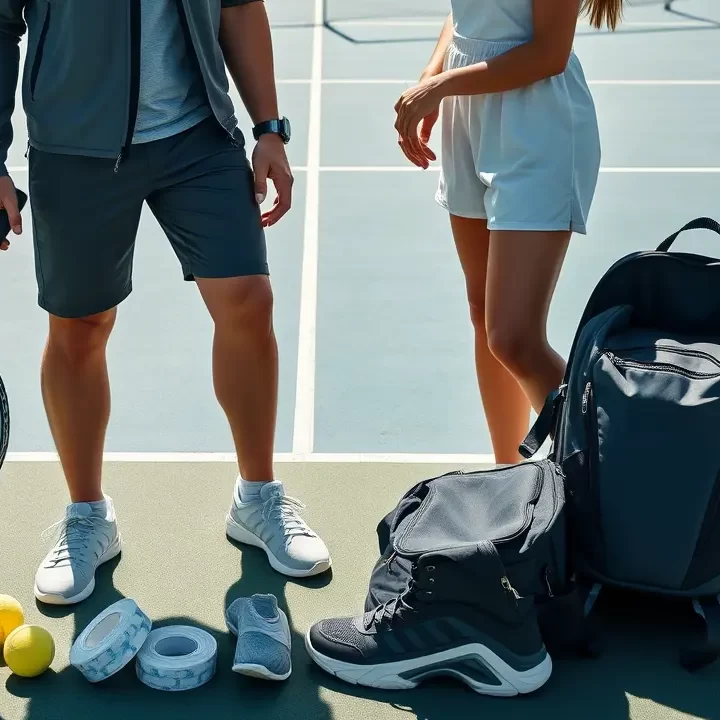
Shoes are your next priority in your padel equipment list. Footwork and stability are crucial in padel’s fast, multi-directional game. You need shoes that provide lateral support, traction on synthetic turf courts, and cushioning for quick stops. Traditional tennis shoes aren’t ideal for padel because padel is usually played on artificial grass with sand (or concrete). Padel-specific shoes have special outsoles and construction to handle this.
Key features for padel shoes:
- Outsole (Tread): Most padel courts use artificial turf with sand, so look for shoes with a herringbone (zig-zag) tread pattern on the sole. This pattern grips the sand-topped turf well, offering traction for quick slides and pivots. Avoid flat indoor soles (like squash shoes) or shoes with deep studs (meant for grass). Herringbone tennis shoes often work, but ideally get a shoe designed for padel or clay tennis courts.
- Support and Stability: Padel involves a lot of side-to-side movement. Shoes should have firm heel counters and reinforced upper materials (like synthetic leather or mesh overlays) to prevent your foot from rolling. Many padel shoes have “midfoot support bridges” or lateral cushioning to help.
- Cushioning: Good midsole cushioning (often EVA or gel technology) absorbs impact from jumps and sprints. This reduces stress on knees and ankles. For example, ASICS Gel-Padel models use gel pads in the heel for shock absorption.
- Fit: Shoes should fit snugly but not painfully tight. A bit of wiggle room for toes is fine, but the heel must stay locked. Padel shoes often have “lasts” (foot shapes) designed to prevent foot sliding inside.
Adidas V70 padel racket held by a player; note the Adidas Gamecourt tennis shoe on her foot (indoor court).
Image: [37] shows a player wearing Adidas shoes suitable for court play. Many padel pros wear tennis shoes that meet padel needs (for example, Paula Josemaría often wore Adidas GameCourt or Nike Air Zoom GP Turbo).
Examples of Padel Shoes:
- ASICS Gel-Padel Exclusive / Gel-Padel Pro: These are padel-specific. The Gel-Padel Exclusive 8 or Pro 5 have plush cushioning and a reinforced toe. ASICS says they’re “designed for quick direction changes” with Gel cushioning to protect joints. Expect around $120–$150.
- Babolat Jet Mach 3 / Jet Ritma (women’s): The Jet Mach 3 is lightweight and highly breathable, geared toward power players. The Jet Ritma is the corresponding women’s model. Both use Michelin outsoles for durability ($130+).
- Adidas Adizero GameCourt / Barricade: Adidas releases shoes each year that some padel players love for their comfort and include in their padel equipment list. The Barricade (now replaced by GameCourt/Adizero versions) offers great stability. Prices vary $100–$140. For example, the Adidas GameCourt 2.0 (a tennis shoe) is popular for its solid build ($70–$100 on sale).
- Nike Air Zoom GP Turbo: A herringbone court shoe with Zoom Air cushioning. Many players (tennis/padel) use this model. The latest Zoom GP is about $100–$130.
- Wilson Kaos Rush/Kaos 2.0: Lightweight and flexible shoes, used by players like Fernando Belasteguín. Good grip and support. About $90–$120.
- Other Brands: Drop Shot, Dunlop, and K-Swiss also make padel/training court shoes. In the U.S., models from these brands are often on Amazon or Padel USA.
Availability (U.S.): Padel shoes can be bought where tennis shoes are sold. Large retailers like Dick’s and Amazon carry padel-specific models (especially ASICS, Babolat, Adidas, Nike). Padel specialty shops (Padel USA, Total Padel, PaddleballGalaxy) carry the full lines. Prices in U.S. dollars generally range $80–$150 for a quality pair, sometimes more for pro-endorsed limited editions.
Top Padel Shoes Comparison
| Shoe Model | Type | Key Feature | Price (USD) |
|---|---|---|---|
| ASICS Gel-Padel Exclusive 8 | All-court (turf) | Gel cushioning, stability | ~$120 |
| Babolat Jet Mach III | Court (turf) | Lightweight, breathability | ~$130 |
| Adidas Adizero Ubersonic 4 | Clay/Turf | Very lightweight, snug fit | ~$140 |
| Nike Air Zoom GP Turbo | All-court | Zoom Air in forefoot | ~$110 |
Example Products: The ASICS Gel-Padel Exclusive 8 is a top-rated padel shoe with gel in the heel for shock absorption. The Babolat Jet Mach III (or the lighter Jet Ritma for women) features a strong herringbone sole. These are sold on Amazon and at padel retailers. For instance, Dick’s Sporting Goods often stocks Adidas and Wilson padel shoes, and Amazon lists all the above models with U.S. sizing and reviews. Athletic department store sites (Nike, Adidas) sometimes list the same shoes marketed for “clay court tennis,” which work for padel too.
Apparel (Clothing)
Apparel is an important part of your padel equipment list. Wearing the right clothes can improve your comfort and range of motion on the padel court. There’s no special uniform required, but here are some tips for choosing apparel :
- Moisture-wicking fabrics: Look for shirts, shorts, and skirts made of technical polyester blends (often marketed as “moisture-wicking” or “dry fit”). These fabrics pull sweat away from your body and dry quickly, keeping you cool during rallies. Cotton T-shirts get heavy with sweat; synthetic sports shirts or even basic running shorts are a better choice.
- Stretch and Fit: Your clothes should allow a full range of motion – lunges, jumps, reaching overhead. Many padel players wear athletic knit shorts (or skorts for women) and shirts with spandex panels or roomy cuts. Compression undershorts can help with support, but not mandatory. Aim for a fit that’s athletic but not restrictive.
- Layers for Weather: If you play outdoors, you might need layers. Early morning or evening sessions (especially in cooler climates) may call for a lightweight hoodie or track jacket. Brands like Adidas and Nike sell light jackets (their “windrunner” or similar) that can be removed when it warms up. On hot days, a simple short-sleeve shirt is fine.
- Brand Collections: Several brands now produce apparel lines “for padel,” often based on tennis styles. For example, Nike and Adidas both have general performance apparel that works great for padel. Spanish brands like Bullpadel, Joma, and Babolat release stylish padel shirts, shorts, and caps featuring moisture-management tech. For instance, Bullpadel’s Extreme or Vertex clothing lines match their rackets.
Example Products: The Nike Dri-FIT shirts and the Adidas Aeroready shorts are popular choices. For women, the Adidas GameMode skort and a fitted polo or tank work well. Expect to spend $30–$60 for a quality shirt or a pair of shorts. Note: You don’t need special padel-branded apparel as a beginner; general tennis or gym wear is perfectly fine if it’s breathable. Just make sure your shoes grip and your clothes don’t restrict movement.
Bags
Next up in your essential padel equipment list is your bag. A good bag keeps all your gear organized and protected. Many padel players invest in a dedicated padel racket bag (or backpack) that can hold 2–4 rackets plus shoes and clothes. Features to look for in a padel bag:
- Compartments: Ideally, there’s a main racket compartment (some with side zippers) to protect the frame, plus additional pockets. Separate sections for shoes or a wet items compartment are very handy. For example, many bag designs have a ventilated shoe compartment to keep court dirt and smell away from your clothes.
- Capacity: Even a small dual-racket bag can do the job for a beginner. If you plan to carry multiple rackets (2–3) and extra equipment, consider a larger bag or backpack-style bag. Brands like HEAD, Wilson, and Adidas offer both sizes.
- Durability and Comfort: Padel bags are usually made of nylon or polyester. Check that the zippers and stitching are sturdy. Padded straps (especially if it’s a backpack style) make it easier to carry to and from court. Water-resistant material is a plus in case of rain. Ventilation is another nice feature (mesh panels) so odors can escape.
Example Products: A popular choice is the HEAD Tour Team Padel Bag (Monstercombi version) which holds multiple rackets and has an insulated pocket. On Amazon, you can find the Head Tour Team Racket Bag (~$80) which has a “Climate Control” pocket for shoesamazon.com. Bullpadel’s Vertex backpack is another highly rated model, and Wilson makes a Pro padel bag (around $50–$70). We saw earlier that the Bullpadel Vertex and Wilson padel bags were recommended in a gear guide. In the U.S., Dick’s and Amazon stock several of these; or check Padel USA’s bags section for more options.
Accessories and Gear
Beyond rackets, balls, shoes, apparel, and bags, several other items in your padel equipment list – though optional – can make playing padel easier and more enjoyable. Here are some useful accessories that beginners should consider:
- Overgrips and Replacement Grips: Your racket’s handle (grip) needs to be tacky and cushioned. Over time the original grip wears out. Wrap a new overgrip (thin tacky tape) around the handle as needed. Overgrips absorb sweat and prevent slippage. Some players prefer thick cushion grips; others like slim grips for feel. Popular overgrips for padel (and tennis) include Tourna Grip, Wilson Pro Overgrip, and HEAD Xtreme Soft. A pack of 3–5 overgrips on Amazon is around $10–$15. Keeping spare grips in your bag is smart – sweaty hands can slip otherwise.
- Vibration Dampener: Padel rackets often come with a small rubber vibration damper that fits in the holes of the face (like the Drop Shot Vibrastop). It reduces vibration on contact. Not essential, but some players use them to soften the feel. Brands like Varlion and Bullpadel also make soft bumper guards for the top edge of the racket to protect against frame nicks – these tape on and are inexpensive ($5).
- Wristbands/Headbands: Basic sweatbands help keep sweat from dripping onto your hands or into your eyes. You can find cheap cotton or terry cloth wristbands ($5–$10) at any sporting goods store. Useful on hot days to maintain grip on the racket. A hat or visor with UV protection is also helpful for outdoor play.
- Protective Eyewear: While not mandatory for adults, beginners (especially juniors) are strongly encouraged to wear protective glasses. A stray ball can come off the wall quickly, and accidents happen in doubles. Padel-specific goggles or even clear sports glasses with wraparound lenses can shield your eyes. Look for lightweight, anti-fog sports glasses with UV protection. (Remarkably, the Padel rules recommend eyewear to reduce eye injuries.) Decathlon and other retailers sell simple protective glasses for under $20, which is a small price for safety.
- Ball Holder / Belt: Padel matches often run through balls quickly. A ball holder (clip-on or waistband pouch that holds 2–4 balls) allows you to carry extra balls on your hip. Padel-specific holders (like “Paddle Girl Padel Belt”) are available on Amazon for $15–$20. Players also use small tennis ball holders or even zip pouch. Having spare balls ready means no scrambling to pick up rolled balls during play.
- Towel and Water Bottle: It sounds basic, but keep a towel in your bag and a reusable water bottle. Padel can be sweat-intensive. Stay hydrated and dry off hands/face between points. A cotton or microfiber towel is fine.
- Stringing and Racket Accessories: Even though padel rackets have no strings, you may eventually want to customize your grip. Racket butt-end or overgrip “end caps” and finishing tape can tidy up a new grip job. Also, some players use grip-enhancing resin (Sudation) on their palms for extra tackiness (a small pouch of resin costs a few dollars).
- Fitness and Recovery Gear: Padel involves lots of quick movements. Consider basic fitness accessories: a set of resistance bands, a foam roller, or massage ball for recovery. Compression sleeves (on calves or elbows) can aid circulation. These are not padel-specific, but many players use them after play to prevent soreness
- Tech Gear (Pads and Apps): Future Trend. As technology seeps into padel, several high-tech gadgets have appeared. Some rackets now come with built-in sensors (for example, HEAD announced its smart rackets) that connect to apps to analyze shot speed and spin There are also padel-specific wearables and foot sensors for advanced training. Beginners don’t need these, but it’s worth knowing that padel is catching up to tennis on tech. Apps like Playtomic let you book courts and track stats, and smart watches can measure heart rate/calories during play.
Product Comparison Tables
To help you choose, here are two tables comparing popular rackets and shoes (with approximate U.S. prices). Note that prices can fluctuate and vary by retailer. Always check current pricing on Amazon or specialty stores and add them to youir padel equipment list.
Top Padel Rackets (2025 models)
| Racket (Example) | Shape | Best For | Weight (g) | U.S. Price (approx.) |
|---|---|---|---|---|
| HEAD Graphene 360+ Alpha Pro | Diamond | Advanced (power) | 375 | ~$280–$320 |
| Bullpadel Vertex 04 (Pro) | Diamond | Advanced (power) | 370 | ~$320 |
| Adidas Adipower CTRL Multiweight | Round | Control/Beginners | 360 | ~$250 |
| Babolat Contact | Round | Beginners (value) | 350 | ~$80–$100 |
Top Padel Shoes
| Shoe (Example) | Surface | Key Feature | Price (USD) |
|---|---|---|---|
| ASICS Gel-Padel Exclusive 8 | Turf courts | Gel heel cushioning | ~$120 |
| Babolat Jet Mach III | Turf courts | Lightweight, breathable | ~$130 |
| Adidas Adizero Ubersonic 4 | Clay/turf | Very light, snug fit | ~$140 |
| Nike Air Zoom GP Turbo | All courts | Zoom Air cushioning | ~$110 |
These tables highlight typical models – many other excellent rackets and shoes exist. Use them as a starting point. Read user reviews on Amazon or Padel USA to see current top sellers.
Real-World Use Cases and Athlete Endorsements
Hearing what top players use can help guide choices. For instance, HEAD sponsors many top pros: Sanyo Gutiérrez (World No.2) plays with the Graphene 360+ Alpha Pro, while Paula Josemaría (one half of the dominant women’s pair) uses a HEAD racket too. Adidas’s Martin Di Nenno and Alex Ruiz use Metalbone series rackets. Babolat’s team players (like Juan Lebrón’s brother, Cristian Gutiérrez) use Babolat rackets. Bullpadel’s top pro Fernando Belasteguín uses the Vertex series
In terms of shoes, many pros still wear tennis shoes rebranded as padel shoes. For example, Ariana Sánchez and Paula Josemaría have been seen in Asics Gel-Rockets or Babolat Jet Mach shoes. These endorsements confirm that big sports brands dominate padel gear. However, beginner players don’t need to match the pros’ expensive gear. It’s more important to find comfortable, durable gear within your budget.
Real-world example: John, a new player in Houston, picked up the HEAD Flash Pro racket (a mid-range, forgiving model) and found he could generate surprising power in his serves. He also appreciated the HEAD Tour Team bag that held 3 rackets and his shoes. Maria, in San Diego, uses a lightweight Babolat Contact racket (cheap on Amazon) and Adizero tennis shoes – she says it works great for her recreational matches.
Video demos are also helpful to boost your padel equipment list. For instance, the YouTube channel Padel Smash Academy reviewed the new Bullpadel XPLO 2025 and noted its aggressive power for advanced players. There are also shoe review videos (e.g. “Best Padel Shoes 2024” by Total Padel) that test grip patterns. We encourage beginners to watch a few product demo videos (search on YouTube for “padel racket review 2025” or “padel shoes test”) to see gear in action.
Frequently Asked Questions (FAQ)
Q1: What is included in a basic padel equipment list for beginners?
A1: A beginner’s padel gear list should include: 1) a padel racket, 2) padel balls (a can of 3), 3) proper court shoes, 4) moisture-wicking athletic clothing, 5) a padel racket bag, and 6) sweatbands/headbands. Additional items often on a comprehensive list are overgrips, a towel, water bottle, and perhaps protective eyewear. Essentially, start with a racket, balls, shoes, and clothes – these cover the fundamentals of playing.
Q2: Can I use a tennis racket or tennis strings for padel?
A2: No, padel rackets are solid paddles with perforations and are designed specifically for the sport. Tennis strings and rackets are totally different. Padel rackets do not have strings at all. You must use a proper padel racket. Similarly, padel balls should be padel balls (not tennis balls) for official play, because padel balls have lower pressure and a slightly smaller size.
Q3: How many padel balls do I need for one game?
A3: In casual play, you often start a match with 3–6 padel balls. Typically, players keep 3 fresh balls in a can on the court. As those wear out, they’ll have a few new ones ready. Official matches may use 3 balls per set and change them every two sets. In practice, a beginner can use the same 3 balls for a 1-hour session, but performance will drop as the balls soften. So, it’s good to have an extra can of balls available.
Q4: How do I choose the right padel racket for my level?
A4: Beginners generally want a racket that’s easy to control and won’t punish off-center hits. That usually means a round or balanced racket, moderately light weight (~350–365g), and a softer feel. Intermediate players may choose teardrop rackets for more power while still needing some forgiveness. Advanced players often use diamond-shaped rackets (head-heavy) for maximum power. Also consider grip size and feel. It’s best to try rackets if you can (some clubs have demo days or rental rackets) to see what feels comfortable.
Q5: Do I need padel-specific shoes, or can I wear tennis shoes?
A5: It’s highly recommended to use padel or clay-court tennis shoes. Padel courts have sand and artificial turf, so the shoe tread needs to handle that. Flat-soled indoor shoes will slip, and heavy soccer/football shoes (with studs) will catch sand poorly. Many people use tennis shoes with herringbone soles (like those for clay courts) as they provide good grip on sanded turf. Padel-specific shoes add features like extra toe protection and focused lateral support. In short, don’t wear hiking boots or basketball shoes; use court shoes meant for tennis/padel.
Q6: How often should padel balls be replaced?
A6: Padel balls lose their bounce relatively fast. Recreational players might replace balls after every 3–6 hours of play (so maybe every few weeks if you play twice a week). If balls feel too soft or light, it’s time for new ones. Inconsistent bounce can ruin timing. High-level players might even change balls every set or use a ball spinner (ball pressurizer), but beginners just buy new boxes of balls every month or so, depending on usage. Always keep extra balls in your bag.
Q7: What should I look for in a padel shoe for my first pair?
A7: Key things are a good tread (herringbone is safest for turf), support around the ankle, and cushioning. Don’t go too light if you’re heavy or a very aggressive mover – you want stability too. Trying on shoes is important: walk and mimic lateral movements in the store. Many beginners start with a reliable model like the ASICS Gel-Resolution (or Gel-Padel Exclusive) or Adidas Court series. Don’t pick shoes just because they look cool; pick them for fit and grip.
Q8: Are there any padel accessories I should consider buying early on?
A8: At a minimum, buy some extra overgrips (to wrap the handle of your racket) – a 3-pack runs $10. Also pick up a small racket cover (usually comes with rackets) to protect it. A sweatband or cap can help you stay comfortable. If you have kids playing or just worry about eye safety, grab a pair of clear sports glasses. A basic padel bag is useful if you have multiple items. Other gadgets (ball machines, smart trackers) are not needed for a beginner.
Q9: Can beginners play padel with tennis balls?
A9: Technically, you can hit tennis balls around, but it’s not the same experience. Tennis balls bounce higher and faster, so rally rhythms change. Also, padded padel walls and fences use a lot of the bounce – with tennis balls, the game feels more hectic. Official padel courts and clubs will expect padel balls. So it’s best to use actual padel balls from the start. They’re widely available and inexpensive.
Q10: Where can I buy padel equipment in the U.S.?
A10: As of 2025, you can find padel gear online and in specialty stores. Online: Padel USA (padelusa.com), Total Padel (totalpadel.com), Paddleball Galaxy, and Amazon carry a wide selection of rackets, balls, bags, and shoes. Amazon often has competitive prices on rackets and clothing. Offline: Check Dick’s Sporting Goods, especially in big cities – they stock HEAD and Adidas padel gear and Wilson/Dunlop items. Also look for local padel clubs; many have pro shops (e.g., Ortega Padel in Vegas, or local tennis shops that have added padel). Expect faster shipping and better selection online.
Conclusion: Next Steps for Beginners
Getting started in padel is exciting, and the right gear will make it smoother. This padel equipment list covers everything from your first racket and padel balls to shoes, apparel, and accessories. Here are some final tips:
- Test and Adjust: If possible, try gear before you buy. Some clubs let you demo rackets or shoes. Otherwise, read reviews (Men’s Health and padel blogs have good beginner guides) and buy from places with easy returns (Amazon or retail chains).
- Start with the Essentials: Begin with a mid-range racket (control-oriented for easier play), a can of good-quality balls, and comfortable shoes. You can upgrade or customize later.
- Follow the Trends, But Sensibly: Know that padel gear is evolving (smart rackets, new materials), but as a beginner, focus on comfort and durability first. Technology like embedded sensors is cool, but don’t pay extra for tech you won’t use yet.
- Learn and Adapt: As you play more, you may find you prefer a stiffer or lighter racket, or a different shoe brand. That’s normal. Keep notes on what you like. Over time, you’ll fine-tune your equipment list (for example, adding a ball machine for practice or ergonomic grips).
Padel is all about fun and rallying with friends. By equipping yourself with this comprehensive gear – backed by expert advice and real-player experiences – you’ll be set for success on the court.
Ready to take the next step? Check out our related guides: the Padel Racket Buying Guide for in-depth racket tips, our Beginner’s Padel Rules & Skills article, and our latest product reviews on the website. Keep exploring, practice often, and enjoy your time on the padel court!
Disclaimer: The information in this article is for general guidance only. Check product details (specs, prices, availability) from official sources before purchasing. Equipment recommendations are not medical or performance advice. We may earn a commission from purchases made through affiliate links mentioned in this article, at no extra cost to you.
Notice: Some links to products (e.g., Amazon or brand store links) are affiliate links. We only recommend products we trust, but you are free to buy from any retailer. Purchasing through affiliate links may earn this site a small commission, which helps support our gear guides.
© 2025 Legit Information All rights reserved. No part of this article may be reproduced without permission.


